.avif)


Product-led growth (PLG) means letting your product sell itself through an outstanding user experience. In a PLG strategy, comprehensive product documentation becomes a powerful growth driver. In fact, for many SaaS products, documentation is the first touchpoint for potential users. Developers and users often encounter API docs or user guides while evaluating a tool. This first impression heavily influences adoption. Over 80% of developers say that clear documentation strongly sways their decision to adopt an API (source). In other words, every great feature or free tier means little if users can’t figure out how to use it. By investing in well-structured, up-to-date documentation, SaaS companies create a welcoming on-ramp that hooks new users immediately.
Documentation often is the product for newcomers. A prospective customer might Google “how to…(your product)” or land on a developer portal before talking to sales. That means your docs are your brand in that moment. Poor or missing docs leave a bad first impression and high friction, driving users away. One report notes that “API documentation is often the first touchpoint developers have with your API, making it critical for first impressions” (source). If those docs are confusing or outdated, users may conclude the product is poorly maintained or too hard to use.
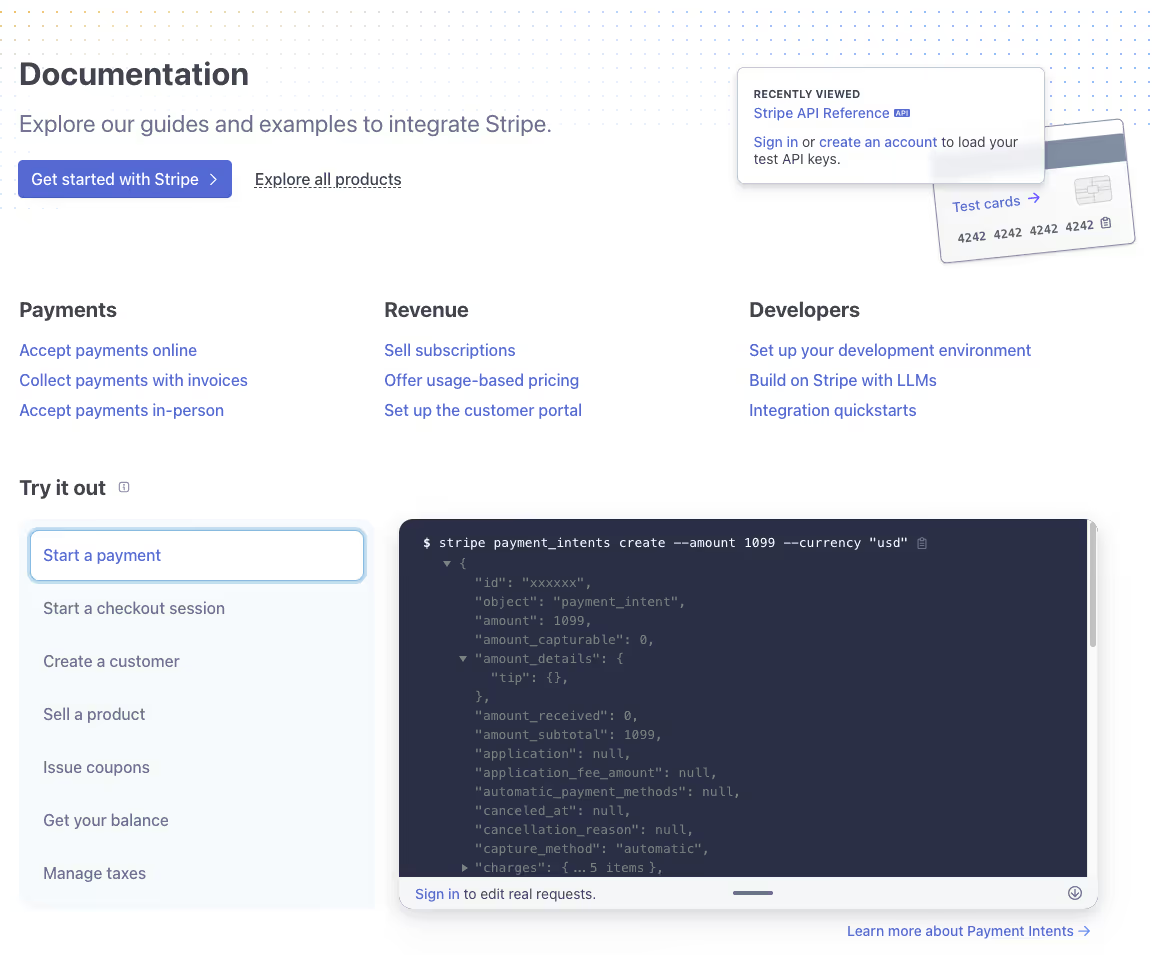
Good documentation, by contrast, demonstrates product reliability and developer-friendly design from the very start. For example, Stripe’s website famously puts developer docs front and center. On Stripe’s homepage you can immediately copy and paste working payment code samples to see a running integration in seconds (source). This interactive documentation turns a trial user into an active user almost instantly. It builds trust by removing barriers: users see exactly how the product works.
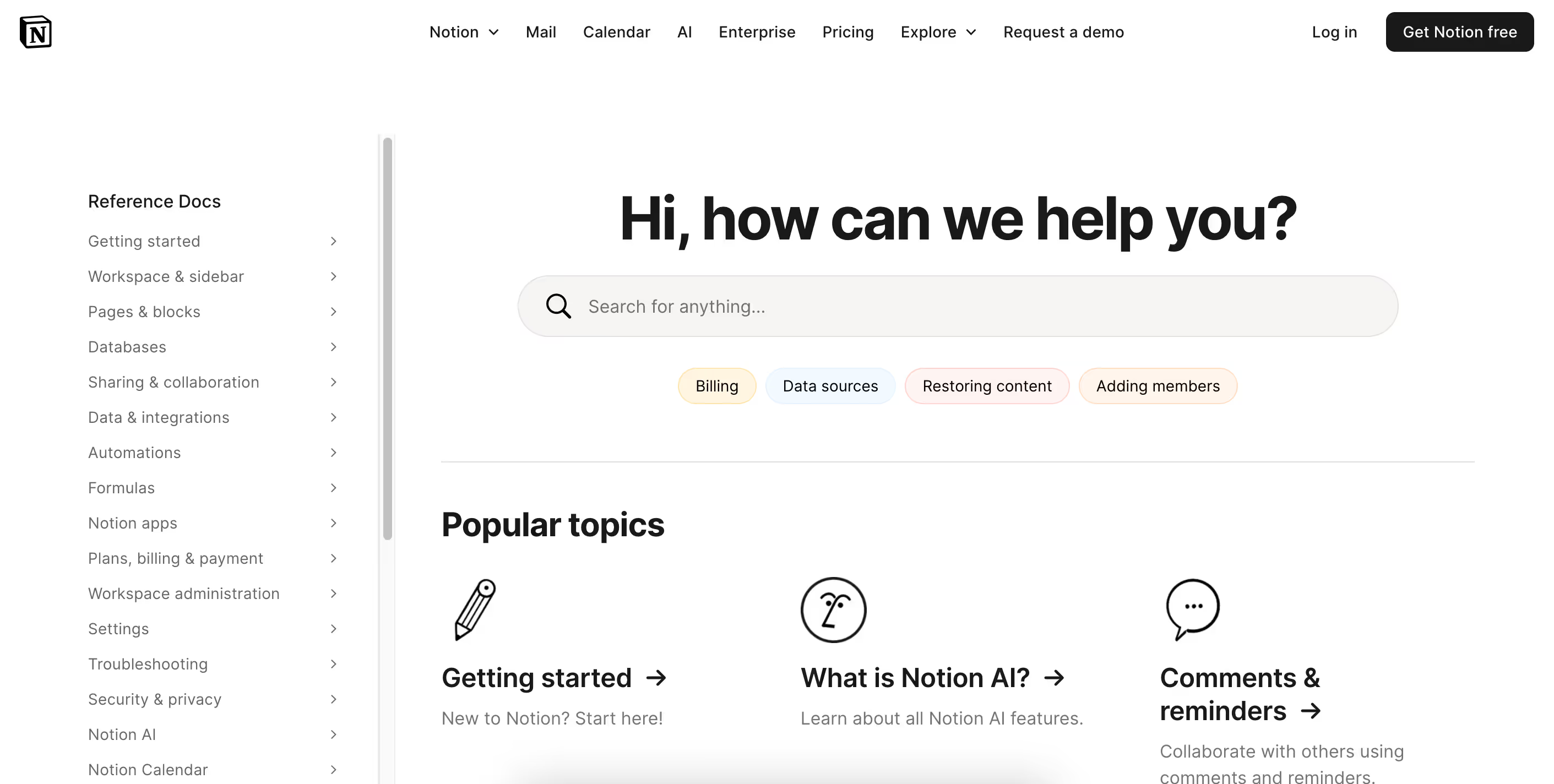
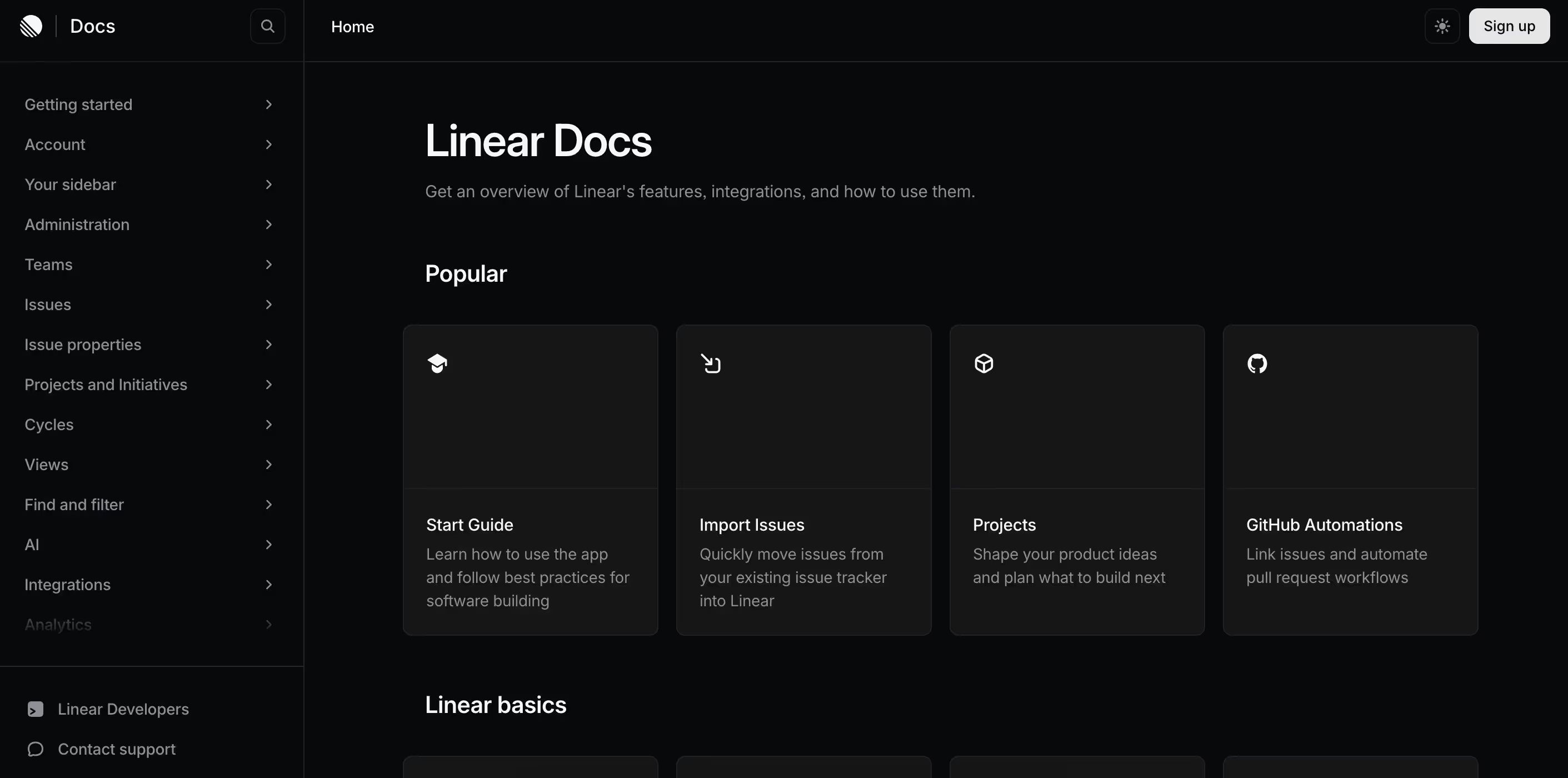
Other PLG leaders follow this model. SaaS companies like Notion and Linear emphasize clarity and ease of use throughout their self-serve funnels. Notion’s help center articles let users hit the ground running without heavy sales intervention, and Linear’s intuitive docs remove doubts before signup. These companies understand that documentation and in-product guides are marketing materials. In PLG you market with your product itself, and documentation is an essential marketing channel.
Well crafted documentation doesn’t just support existing users. It attracts new leads. Public product docs rank highly in search engines and can convert curious visitors into trial signups. In one case study, a company discovered that 12% of all their free trials were directly driven by visitors landing on help or support pages (source). In other words, docs pages generated one-eighth of their trials. This shows that documentation can be a lead generation engine: users searching for solutions find the docs, get value or answers there, and then decide to try the product.
To leverage this, companies should make documentation public and trackable. Ensure your docs site is indexed by Google and instrumented with analytics. ProductLed.com advises that SaaS docs pages should use tools like Google Analytics so you can measure how often docs lead to conversions (source). Then you can optimize high-traffic docs pages with calls-to-action or signup prompts. In effect, your documentation becomes a self-service marketing funnel: educate users on what your product can do and gently push them toward signing up for that feature.
Beyond acquisition, documentation greatly affects user satisfaction and retention. If users get stuck and no answer is available in your docs, they’re likely to churn. Data shows most customers have little patience for confusion: a Wyzowl survey found that 80% of customers have abandoned a service because they didn’t know how to use it (source). In short, poor documentation causes churn. Conversely, clear help guides keep users engaged.
Good documentation acts like a 24/7 support agent. It lets users solve problems on their own terms. In fact, 78% of users prefer to solve product issues themselves rather than waiting for a support (source). When users find answers quickly in your docs, they feel empowered and satisfied. This self-service model also reduces support costs. Instead of a ticket-driven helpdesk, well-indexed articles and tutorials handle the bulk of common questions. That frees up your team to improve the product, further fueling PLG.
Some key retention benefits of strong documentation include:
Some of today’s most successful SaaS companies illustrate these principles with their docs. Stripe we’ve mentioned, but it’s worth highlighting how they do it. Stripe’s API docs allow you to start accepting real payments by copying sample code from the homepage. This interactive, example-driven format makes it impossible to miss the “aha” moment (source).
Other SaaS companies also leverage documentation for PLG:
In each case, documentation wasn’t an afterthought. It was integral to the go-to-market.
To truly drive PLG, documentation should be:
In a product-led world, documentation is not just support. It’s marketing, onboarding, and brand-building all in one. High-quality docs let users sell your product for you by experiencing value immediately. They reduce friction, lower churn, and even drive new user acquisition through search and sharing. The evidence is clear: companies that ignore docs risk losing 80% of customers at the first hurdle, while those that double down on documentation open a powerful growth channel.
For SaaS companies, the message is simple: make documentation a priority. Dedicate resources to write, maintain, and continuously improve your docs. Showcase your APIs or features with clear examples. Use analytics to find which help articles convert best, and iterate on them. Like Stripe and many other PLG champions, put your documentation in the spotlight. When done right, documentation can be the secret sauce that turns a great product into a runaway success.
Wikidoc is an AI-powered documentation platform that helps businesses easily capture, share, and preserve organizational knowledge.



.avif)